Where Does AI Actually Fit in Intelligent Inspection?
09 July 2026
AI and machine learning are increasingly discussed across asset-intensive industries. But the more useful question for operators isn’t whether AI is coming, it’s where it genuinely adds value: reliably, transparently and without creating unnecessary new risks.
The Data Challenge in Ultrasonic Inspection
Our UT inspection system captures a substantial volume of measurement data in a single run. Each ultrasonic A-scan is a time domain signal containing information about reflections from pipe boundaries, interfaces and potential anomalies. Across long lengths of pipework or complex pipelines, this becomes a large and demanding interpretation task.
Experienced inspectors remain central to this process. They understand operational context, recognise unusual signal behaviour and make the decisions that matter for asset integrity. However, manual signal interpretation is time consuming and even highly skilled teams must work through large volumes of data while maintaining consistency across shifts, projects and inspection environments.
This is where machine learning can play a practical role. Rather than replacing human judgement, it can support repeatable, clearly defined parts of the interpretation process – helping identify key ultrasonic time markers within an A-scan, which are used to calculate wall thickness. The model is not asked to decide whether a pipeline is safe. It is asked to perform a specific analytical task: interpret a signal consistently, flag uncertainty where appropriate and provide engineers with information on which to base their decisions.
This boundary is essential. AI is most useful when deployed as an engineering tool, not as an unexplained black box.
A Second Knowledge Transfer Partnership
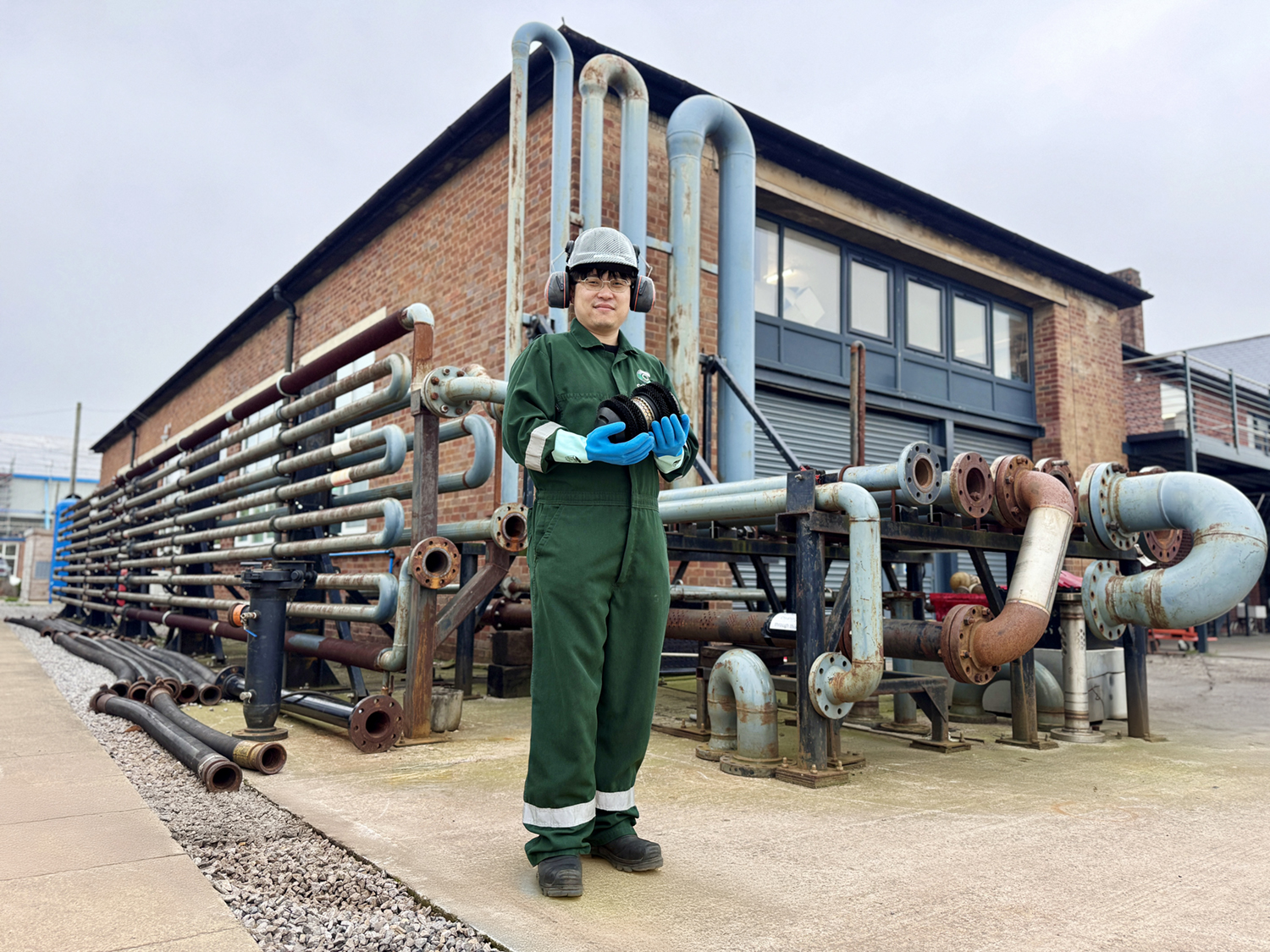
This approach is being developed through our second Knowledge Transfer Partnership with the University of Strathclyde, building on the Grade A (Outstanding) result of our first collaboration. The project brings together academic research, industrial experience and operational application around a shared goal: improving the utilisation of ultrasonic inspection data.
Our KTP Associate, Hongyu You, is focused on applying machine learning to wall thickness measurement accuracy, developing models capable of handling varied signal conditions and ensuring outputs can be evaluated in terms meaningful to inspection engineers. Performance is not assessed solely by whether a model identifies a wave packet in an A-scan. It must also be assessed against the engineering consequence of that interpretation, including whether the resulting wall thickness estimate falls within an appropriate measurement tolerance.
The work has progressed from early-stage research into a structured engineering development phase, encompassing model architecture development, construction of a labelled ultrasonic database covering wall thicknesses from 2mm to 20mm and practical integration considerations. This ensures that machine learning outputs are not treated as isolated predictions, but as part of a real inspection workflow. Indicative validation work has explored data utilisation levels of around 85% and wall coverage of up to 96% in specific test conditions.
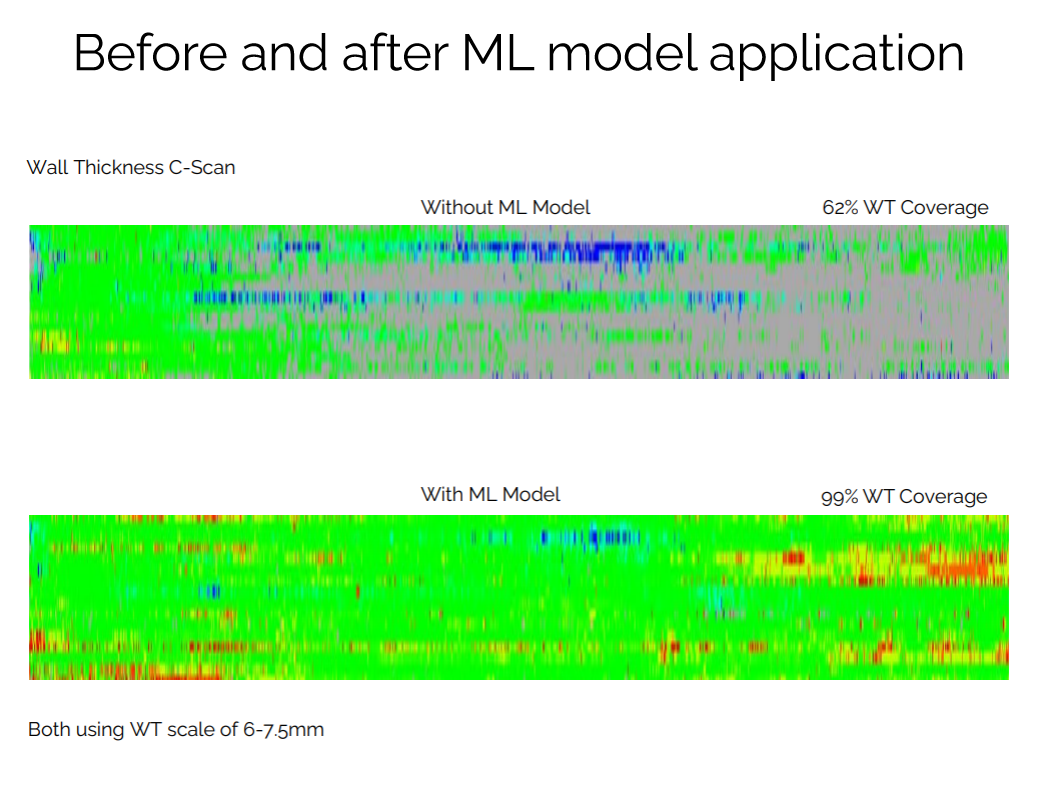
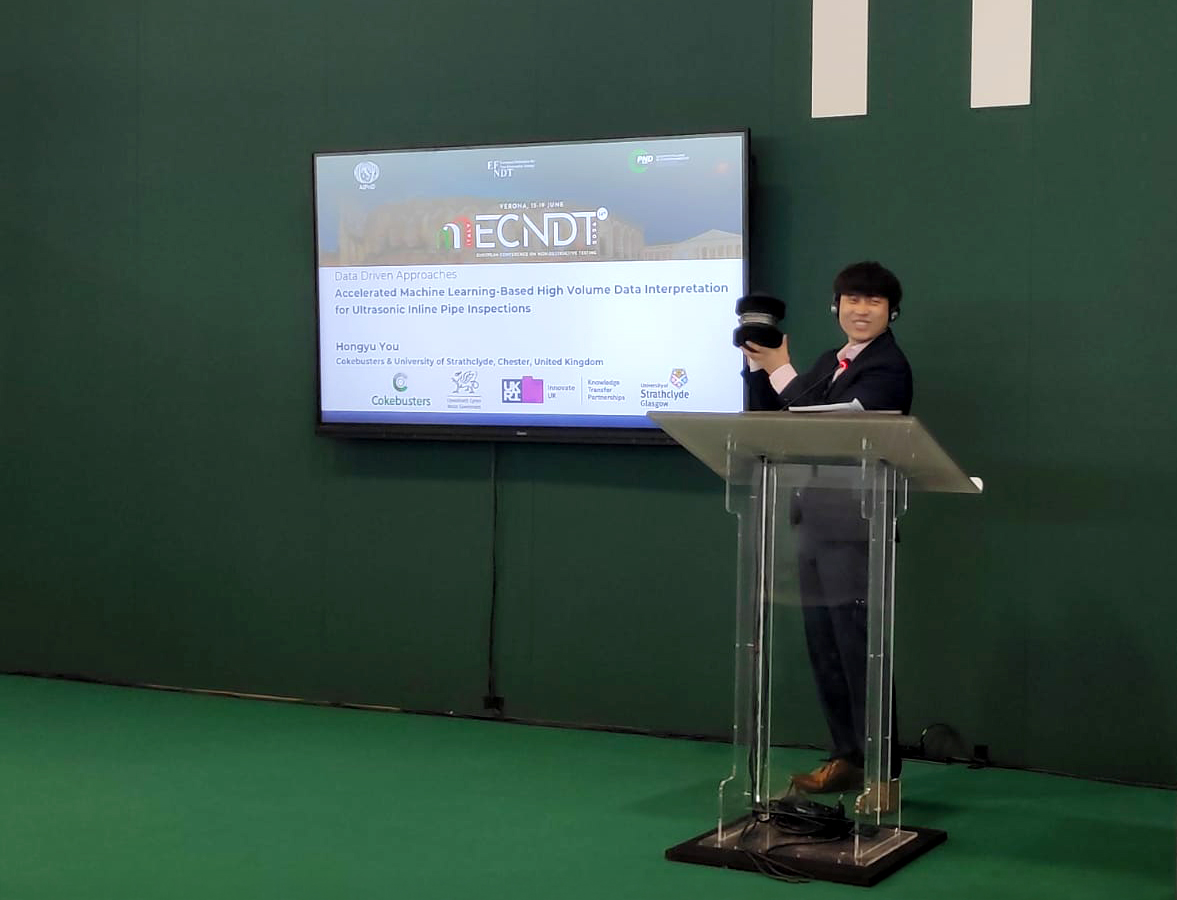
The latest developments have also been presented at industry conferences, with dedicated reports submitted to Innovate UK and relevant technical journals.
Why This Matters for Operators
For operators, the potential value is straightforward. Better use of inspection data helps teams work through large volumes of ultrasonic information more efficiently. This approach supports more consistent interpretation, reducing repetitive manual workload and allowing engineers to focus their time on signals and decisions that require the greatest expertise.
Over time, this capability can contribute to a more informed approach to integrity management: one in which data is not simply collected and stored, but interpreted in a structured, repeatable and traceable way. The aim is not to remove the engineer from the process, but to give the engineer better tools.
AI will not solve every inspection challenge, and it should not be expected to. But where the task is repetitive, data rich and technically well defined, machine learning offers a meaningful complement to existing inspection expertise.
The future of intelligent inspection is therefore unlikely to be fully autonomous. It is more likely to be collaborative, combining experienced engineers, robust inspection methods and carefully validated data driven tools. That is where AI has its most practical place.
As the current KTP approaches completion, we look forward to sharing more about the outcomes, lessons learned and what this means for the future of our inspection capability.

 Environmental Policy