What Happens When You Apply the ‘Unpiggable’ Label?
30 April 2026
In pipeline and process integrity management, few words carry as many consequences as “unpiggable.” Once applied, the label has a habit of sticking and it is accepted that certain assets simply cannot be inspected. For many operators, that acceptance has become embedded in maintenance planning, risk registers and integrity programmes without ever being meaningfully challenged.
It is worth asking: what does that acceptance actually cost?
The Integrity Programme Gap
When an asset is designated unpiggable, it is effectively removed from the inspection regime. There is then no baseline, no trend data, no mechanism for detecting deterioration until it manifests as a process problem, an anomaly on an external survey or a failure.
For integrity engineers, this creates a challenge. A robust integrity programme depends on traceable, repeatable, comparable data that allows condition to be monitored over time and decisions to be made with confidence. Assets sitting outside that programme introduce uncertainty that cannot simply be managed away through conservative assumptions or increased inspection frequency elsewhere.
The Risk Register Problem
Without inspection data, risk cannot be quantified – only estimated. And estimated risk, however carefully calculated, is difficult to defend when scrutinised by regulators, insurers or internal governance teams.
Operators carrying uninspected assets on their risk registers are essentially working with an incomplete picture. They may know an asset exists, they may understand its operating conditions and they may apply engineering judgement to its likely condition, but they cannot demonstrate its actual integrity. In an environment where accountability and auditing are increasingly central to asset management, that gap is becoming harder to justify.

The Commercial Consequence
There is a tendency to view uninspected assets as a cost avoided. In reality, they represent a cost deferred that typically grows over time.
Operating without inspection data shortens the window available for planned intervention. Deterioration that might have been identified early, managed incrementally and addressed during a scheduled turnaround instead goes undetected until it demands a reactive response. Reactive intervention is invariably more expensive, more disruptive and more difficult to resource than planned maintenance. The longer an asset remains outside an integrity programme, the greater the exposure.
Challenging the Label
The unpiggable designation is rarely a statement about physical impossibility. More often, it reflects the limitations of conventional inspection tooling – multi-body designs that cannot navigate tight bend radii, diameter transitions or restrictive geometries. In most cases the constraint is the tool rather than the tube or pipe.
This distinction is important because accepting the label without questioning its basis means accepting the limitations of a previous generation of technology as permanent, when the technology itself has moved on considerably.
What Modern Inspection Technology Changes
Compact intelligent pigging systems have fundamentally changed what is inspectable. Designed specifically to navigate the geometric constraints that defeat conventional tools, modern single-body Smart Pigs can operate through tight bends, short radius configurations, diameter transitions and restricted access points. They can deliver through-wall ultrasonic data from assets previously considered beyond reach.
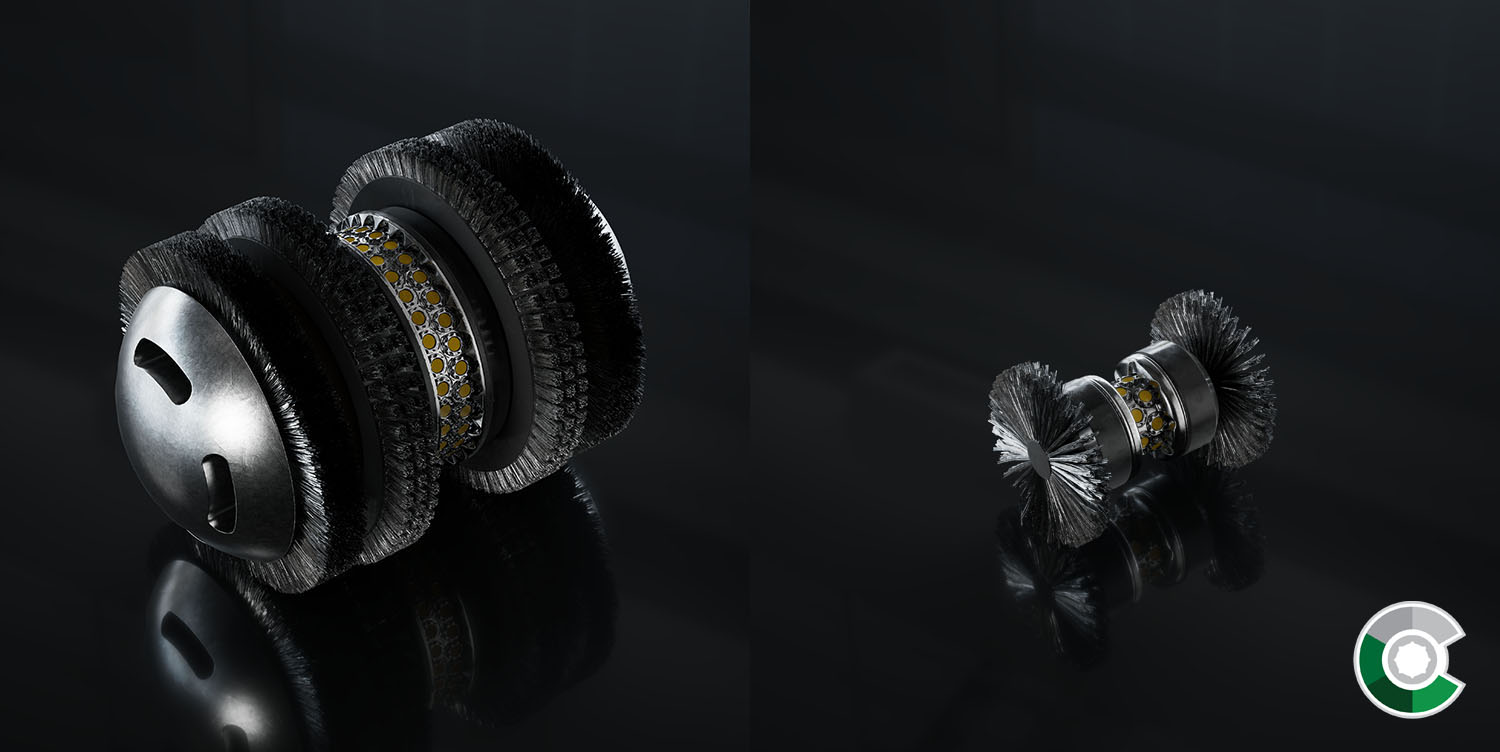
Critically, this capability does not require system modification. Assets can be brought into a full integrity programme without significant capital investment or operational disruption, enabling operators to establish baselines, begin trend analysis and make informed decisions on asset health for the first time.
Revisiting the Assets You’ve Written Off
If your integrity programme contains assets carrying the “unpiggable” label, it may be time to ask whether that designation still holds. In many cases, the answer is that it doesn’t and that inspection is not only possible but straightforward with the right tooling.
We have spent more than two decades developing inspection technology specifically for the assets others cannot reach. If you have pipelines or process tubing historically excluded from your inspection regime, we would welcome the opportunity to assess whether they still need to be.
Get in touch with our team to find out more.


 Environmental Policy