In-Line Pigging Valves: Unlocking Inspection Access in Constrained Systems
26 February 2026
Across pipeline networks and process facilities, certain lines are often described as “unpiggable.” Tight geometry, limited space, diameter constraints and complex routing frequently make conventional in-line inspection impractical.
Yet in many cases, the infrastructure to enable pig access already exists.
In-line pigging valves – commonly installed to support cleaning and flow assurance activities – can also provide a practical and efficient route to internal inspection, provided the right tooling is available.
For operators seeking to reduce integrity blind spots without costly modification work, these valves may represent a significant and often underutilised opportunity.
What Is an In-Line Pigging Valve?
An in-line pigging valve is a compact valve assembly installed directly into a pipeline, designed to allow the insertion and retrieval of bi-directional pigs without the need for bespoke launcher and receiver traps.
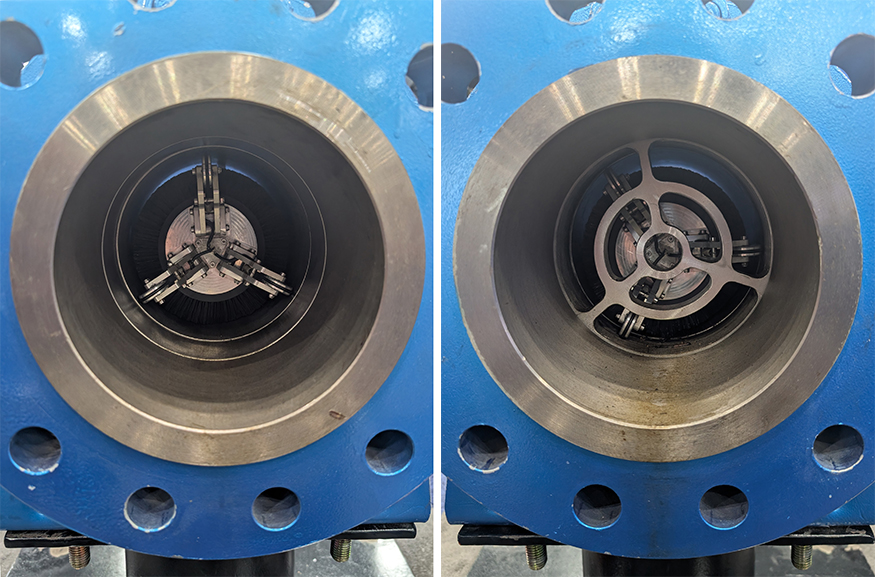
Unlike traditional pig traps, which require additional pipework, structural supports and space allocation, in-line pig valves:
-
Occupy a minimal footprint
-
Are integrated directly into the pipeline
-
Enable pig insertion through a sealed valve mechanism
-
Avoid the need for permanent launcher/receiver barrels
-
Are typically installed in small to medium diameter systems (approximately 2”–20”)
They are commonly found in:
-
Multiphase flowlines
-
Gathering systems
-
Distribution pipelines
-
Short transmission segments
-
Constrained refinery transfer lines
Historically, their primary role has been to support flow assurance; enabling cleaning pigs to remove wax, scale or debris and maintain throughput. However, their potential to support intelligent inspection is increasingly relevant.
Why Inspection Has Historically Been Limited
Although in-line pig valves provide physical access to the pipeline, conventional inspection tools have often been unable to operate within the associated constraints.
Traditional intelligent pigs are frequently:
-
Multi-bodied
-
Long and heavy assemblies
-
Dependent on full launcher and receiver infrastructure
-
Requiring significant mechanical intervention to establish launch/receive points, leading to extended downtime
-
Limited in their ability to navigate short-radius bends or tight transitions
-
Unable to pass through restrictive features such as unbarred tee pieces or schedule changes
As a result, many systems have continued to be categorised as “not practically inspectable,” even where a pigging valve exists.
In many cases, the limitation lies not with the valve, but with the inspection tooling itself.
Turning Flow Assurance Access into Integrity Insight
For many operators, in-line pigging valves were installed to maintain flow assurance. But if pig access already exists for cleaning purposes, it may also be possible to deploy compact intelligent inspection tools through the same infrastructure.
This presents several operational advantages:
-
No requirement for structural modification
-
Avoidance of hot work or welding activities
-
Reduced permitting complexity
-
Lower cost compared to installing traditional pig traps
-
Minimal disruption to surrounding infrastructure
-
Reduced asset downtime
When paired with purpose-designed compact inspection pigs, existing in-line pig valves can transform previously constrained lines into inspectable assets.
This is particularly relevant in systems where:
-
External UT is impractical due to insulation or access limitations
-
Flowlines contain complex geometries such as tight-radius bends or schedule transitions
-
Short pipelines connect critical assets
-
Lines have historically been excluded from formal integrity monitoring
Rather than accepting inspection blind spots, operators may be able to make more effective use of infrastructure already in place.
Compact Intelligent Pigging Through In-Line Valves
Modern single-bodied intelligent pigs are specifically designed to navigate constrained systems commonly associated with in-line pig valves.
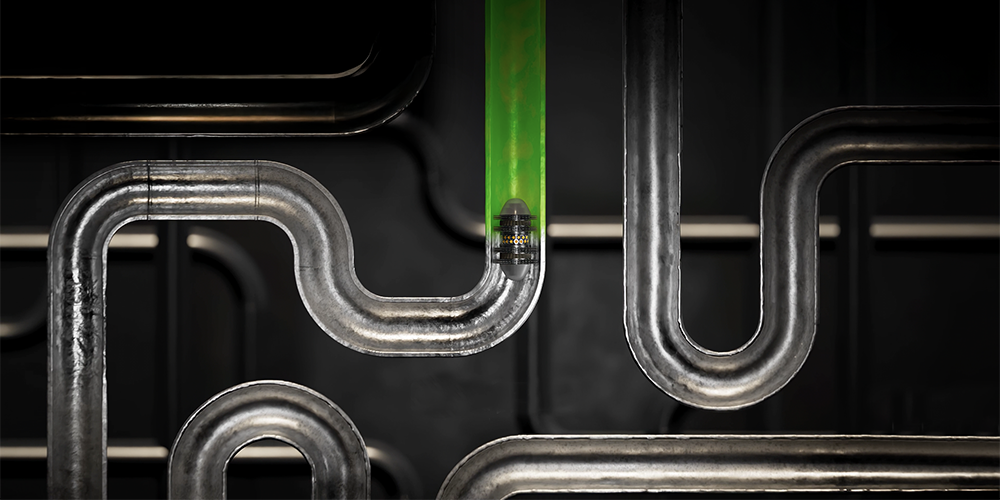
Compact form factors, bi-directional capability and self-contained battery power allow deployment without the need for traditional launcher arrangements.
Once deployed, ultrasonic inspection tools can provide:
-
Internal diameter measurements
-
Wall thickness readings
-
Detection of localised and general corrosion
-
Identification of diametric anomalies
-
High-density data suitable for repeat inspection comparison and trend analysis
In some cases, systems previously described as “unpiggable” can be incorporated into structured integrity monitoring programmes with minimal modification.
As discussed in our recent article on eliminating integrity blind spots, inspectability is increasingly defined by tooling capability rather than pipe geometry alone.
Supporting a Data-Led Integrity Strategy
Across both pipeline and process environments, regulatory scrutiny and performance expectations continue to increase. Defensible, traceable data is essential.
In-line pigging valves, when effectively utilised, can support:
-
Quantitative internal condition assessment
-
Repeatable inspections for deterioration trending
-
Improved confidence in Fitness-for-Service assessments
-
Reduced reliance on assumed corrosion rates
-
More informed maintenance and shutdown planning
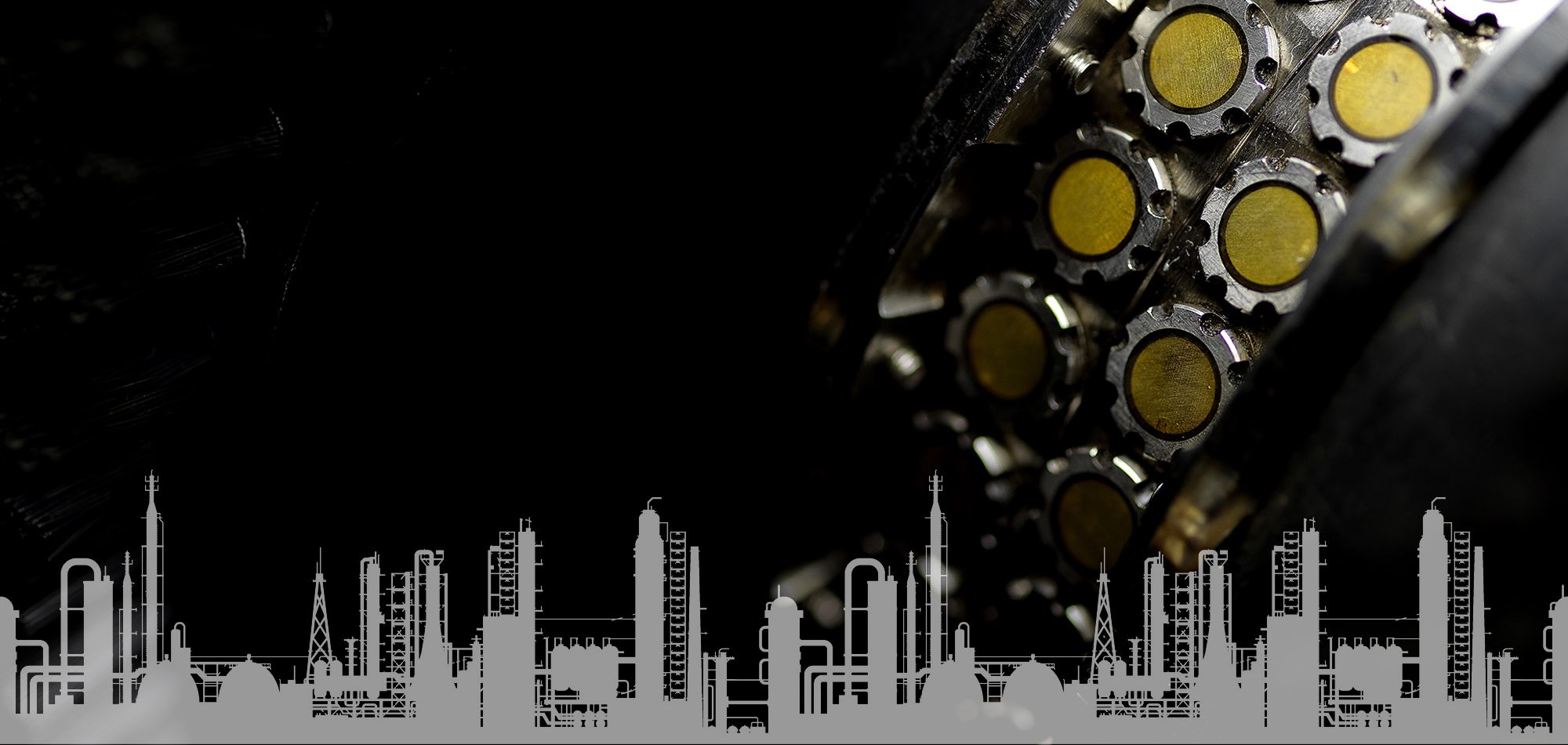
Where systems are buried, insulated, elevated or otherwise difficult to access externally, internal inspection via existing in-line pig valves may offer the most practical and efficient solution.
Designing for Inspectability
Looking forward, the integration of in-line pigging valves during new build or upgrade projects should be considered not only from a flow assurance perspective, but as part of a long-term integrity strategy.
Ensuring compatibility between valve bore, pipeline geometry and inspection tooling at the design stage can significantly reduce lifecycle integrity risk and avoid future classification of assets as “uninspectable.”
As infrastructure evolves and operators place increasing emphasis on asset longevity, designing for inspectability is becoming as important as designing for throughput.
Turning Access Into Insight
In-line pigging valves are more than a cleaning convenience, they can be a strategic integrity enabler.
With appropriate inspection technology, existing valves may unlock access to internal condition data that was previously considered unattainable.
For operators seeking to reduce integrity blind spots without extensive modification work, assessing the inspection potential of existing in-line pig valves may be a valuable first step.
If you would like to explore how your in-line pigging valves could support internal inspection within constrained pipeline or process systems, our team would be pleased to provide further guidance.


 Environmental Policy