Twenty Years of Innovation: The Evolution of Cokebusters’ Smart Pig Technology
11 December 2025
As we celebrate our 20th anniversary year, we’ve taken time to reflect on the journey that shaped Cokebusters into the company it is today. At the heart of that journey lies a defining principle that has guided us since the beginning: a commitment to innovation driven by real-world challenges in mechanical cleaning and in-line inspection.
Nowhere is this more evident than in the development of our patented Smart Pig technology. What started as a bold idea in the late 1990s has evolved into a family of industry-leading inspection tools capable of navigating some of the most complex tubes and pipelines in the energy sector.
This is the story of that evolution and the engineering breakthroughs that made it possible.
Laying the Foundations – The Early Concept (Mark 1)
The origins of the Cokebusters Smart Pig go back to 1997, when founder John Phipps began exploring solutions to a problem he knew intimately. By the time Cokebusters was established in 2005, John had more than a decade of hands-on mechanical decoking experience and a deep understanding of the challenges posed by short-radius U-bends, box headers and restrictive refinery coil configurations.
At a time when the industry assumed these geometries were unsuitable for intelligent inspection, John approached the issue from a different angle and attempted to solve the mechanical problem first.
Mechanical understanding as the starting point
Unlike others in the field, Cokebusters’ early development focused on how to make a pig body physically capable of navigating tight, multi-plane heater coils. This involved extensive work on:
-
Pig body behaviour in short-radius bends
-
Forces imposed by pumping-unit control systems
-
Mechanical robustness under high pressure and flow
-
Stable travel through box headers and mule-ear layouts
This emphasis on mechanical reliability set the foundation for everything that followed.

Early ultrasound trials in Scotland
In parallel, the team began exploring how ultrasound could be integrated into a travelling tool. Much of this research – including bench testing and experimental trials – took place in Fort William and Aberdeen, where the team experimented with how best to transmit, receive and interpret signals inside small-diameter tubes.
The initial goal was simple: prove that a tube had been cleaned internally.
But client engineers wanted something more. They wanted to see what was happening on the outer tube surface. John recalls the “eureka” moment clearly:
when the first echo from the outer wall was captured, the technology fundamentally shifted direction.
Now the vision wasn’t just to confirm cleanliness – it was to create a full integrity inspection tool.
The birth of TAIL software
This led to another critical innovation:
TAIL — Tube Anomaly Identification & Location.
Rather than overwhelming clients with raw ultrasonic data, the software was designed to present inspection results using visual formats engineers already trusted:
-
Traditional general arrangement diagrams
-
A circular cross-section of tube wall thickness
Behind the scenes, sophisticated microprocessing analysed the full dataset and distilled it into a clear, intuitive display.
In John’s words: “When identifying a tube or pipeline anomaly, we answer the questions: what is it and where is it?”
The fundamental design logic behind TAIL remains central to our inspection reporting today.

Technology accelerated by external innovation
Early prototype tools relied on components available at the time – including Mark 2 units powered by standard AA batteries which were large, low-powered and unstable at high temperatures.
Advances in the consumer electronics market, such as digital camera batteries and compact microprocessors, rapidly increased what became mechanically and electrically possible.
Cokebusters didn’t invent these components, but we were quick to recognise their potential, integrate them and create something the industry hadn’t seen before.
1st Generation – A Proof of Possibility (Marks 2–3)
In service: 2005–2012
By the time Cokebusters was incorporated in 2005, the first-generation inspection tools had matured into working, deployable systems. These early pigs featured:
- A twin/triplet-body design
- One pig size (16 transducers)
- Water-sealed internal electronics
- Early ultrasonic measurement capability
- Heavy stainless-steel construction c. 1900g
- One pig size (16 transducers)
Although comparatively large and basic by today’s standards, they proved something crucial: intelligent pigging of refinery tubes was possible.
This breakthrough opened the door to a new era of inspection capability for systems previously deemed unpiggable.
2nd Generation – A Revolution in Design (Mark 4)
In service: 2012–present
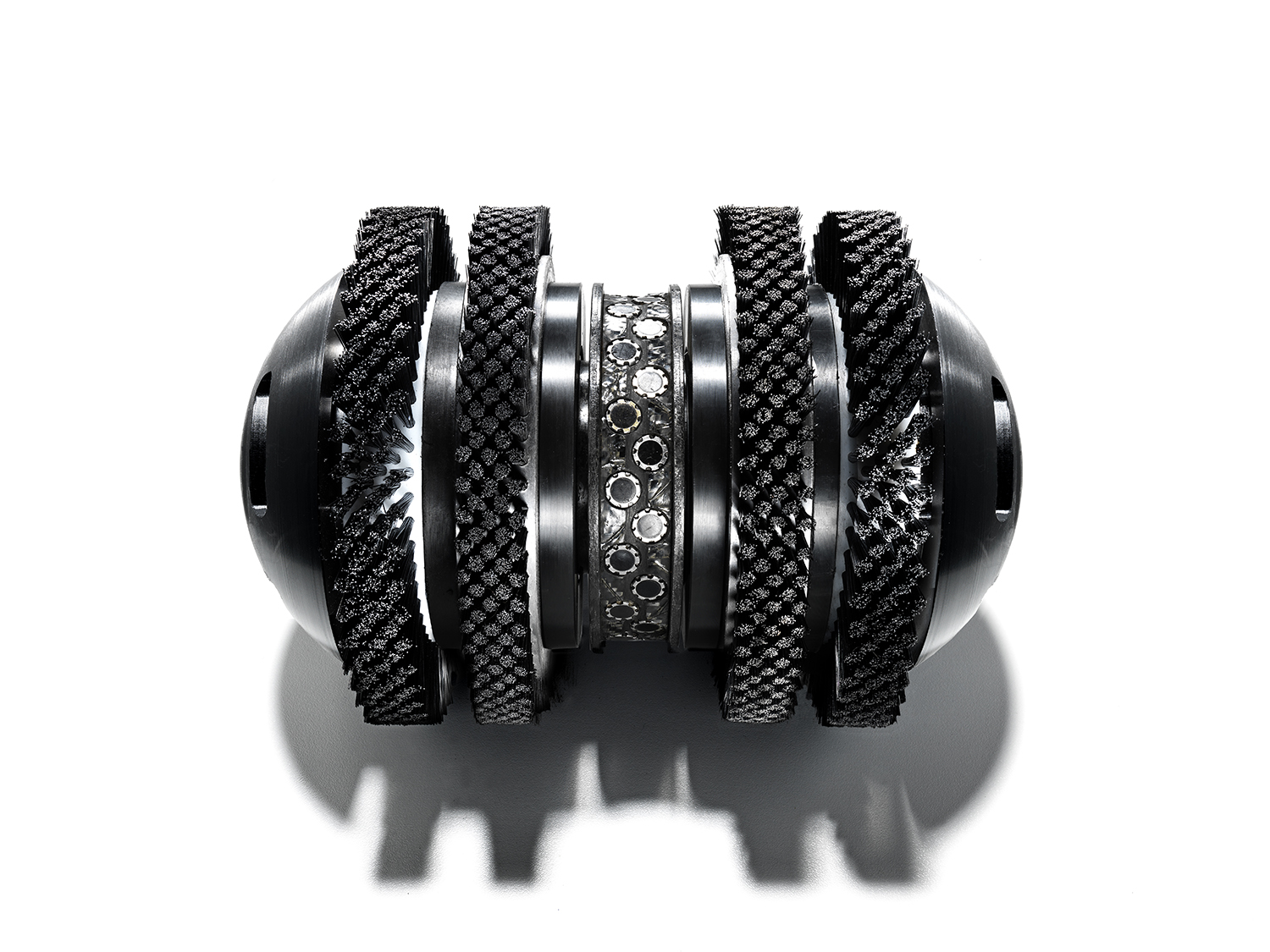
The second generation marked a defining shift. This was the first time all components – transducers, electronics, batteries, alignment systems – were brought together in a single, compact body, eliminating the structural limitations of twin-body designs.
Key innovations included:
-
Single-body construction, initially carbon fibre
- Three pig sizes (8, 16 & 32 transducers)
-
Li-Fe battery technology, greatly improving endurance and stability
-
A new PCB stack
-
Brush alignment rings
- Light-weight carbon fibre & PC assembly c. 322g
Mark 4 represented a revolution in usability and performance, making inspection more reliable, more efficient and more widely applicable.
3rd Generation – Greater Coverage and Capability (Mark 5)
In service: 2020–present

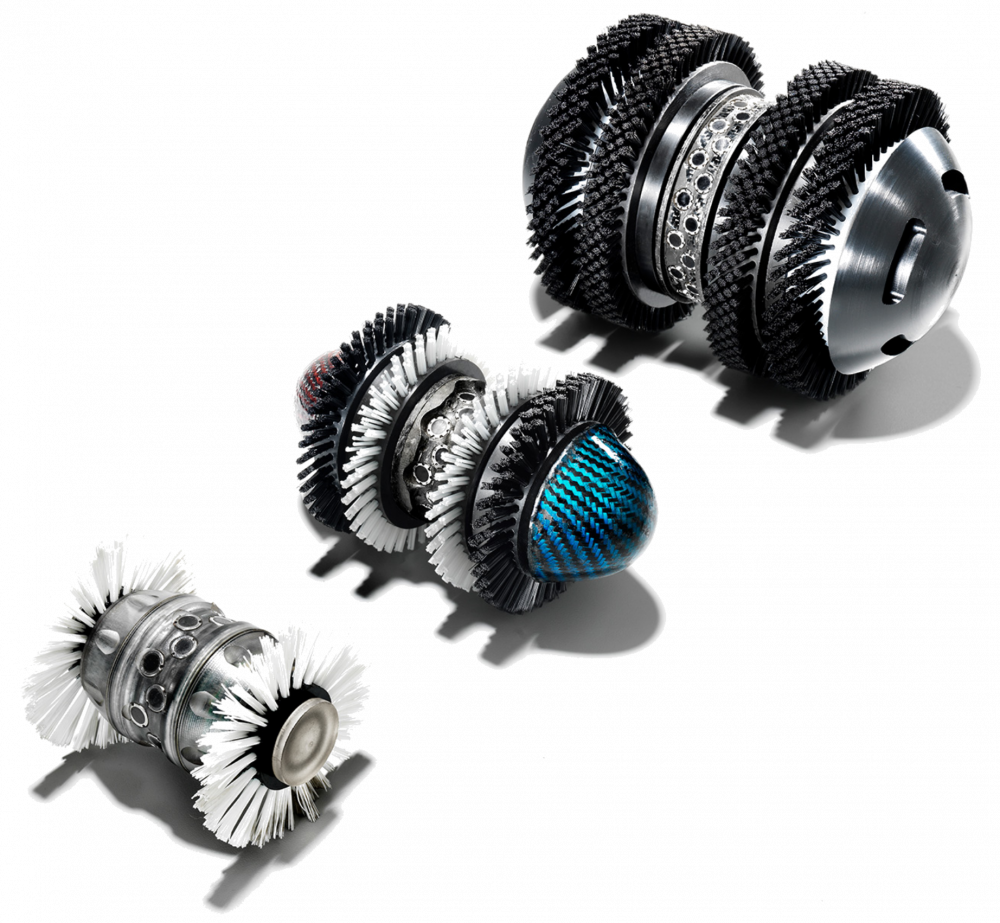
The Mark 5 introduced a new era of inspection sophistication, focused on improving the quality and density of data recovered from challenging systems.
Enhancements included:
-
Improved ultrasonic coverage
-
Three pig sizes (8, 16 & 32 transducers)
- Brush alignment rings
-
Refined detection logic for more accurate indication classification
-
A redesigned mechanical body suited to demanding geometries
- Stainless steel & PEEK assembly c. 330g
This generation remains a cornerstone of our inspection capability today.
4th Generation – The Smallest Intelligent Pig in the World (Mark 6)
In service: 2022–present

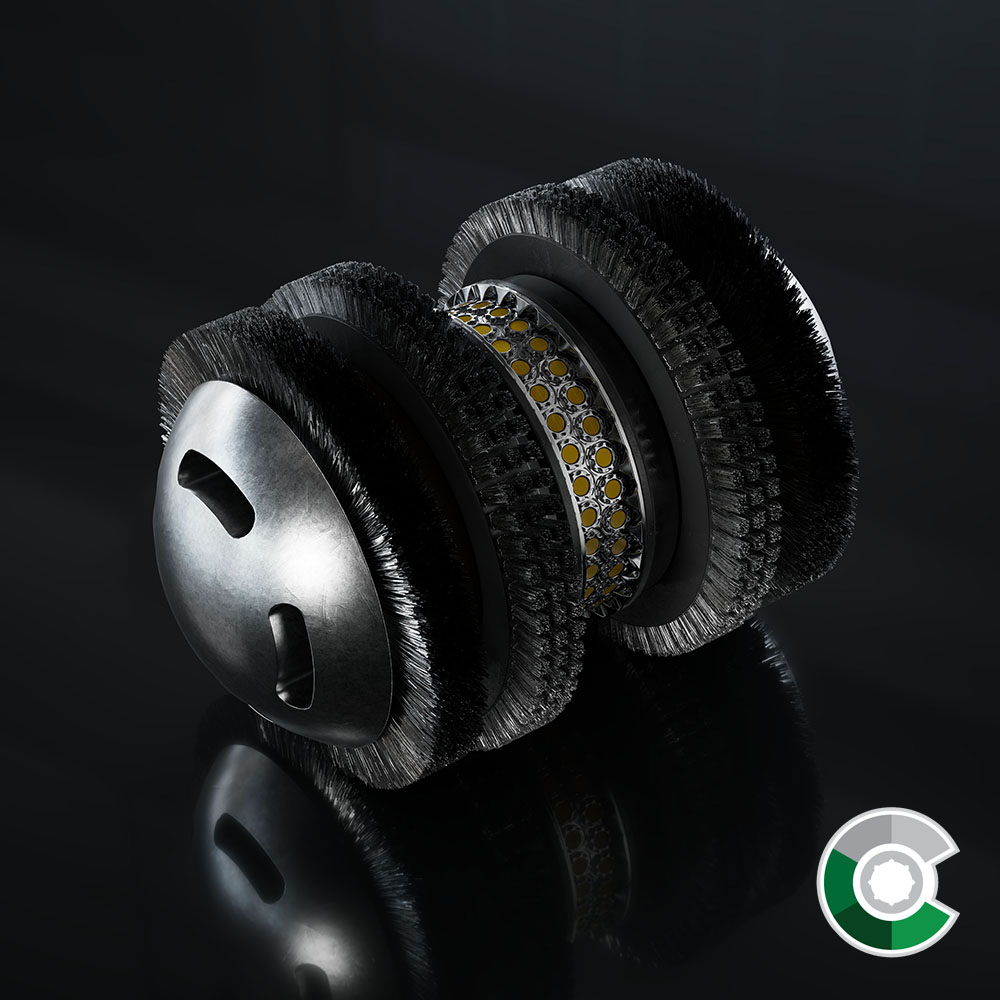
Our most recent evolution, the Mark 6, is an ultra-compact intelligent pig capable of operating in diameters as small as 1.5”. It represents the culmination of decades of mechanical and electronic refinement.
Features include:
-
A lightweight titanium body
-
A completely new PCB stack
-
Updated end cap and ancillary systems
-
Compatibility with highly restrictive geometries
It is believed to be the smallest ultrasonic intelligent pig in commercial use anywhere in the world.
A Journey Defined by Innovation and Looking to the Future
Across four generations, the Smart Pig’s evolution reflects Cokebusters’ unique approach: combining deep mechanical knowledge, emerging technologies and practical field insight to solve problems others considered impossible.
From stainless-steel prototypes powered by AA batteries to ultra-small titanium-bodied devices guided by advanced processing software, the Smart Pig has come a long way and its development continues.
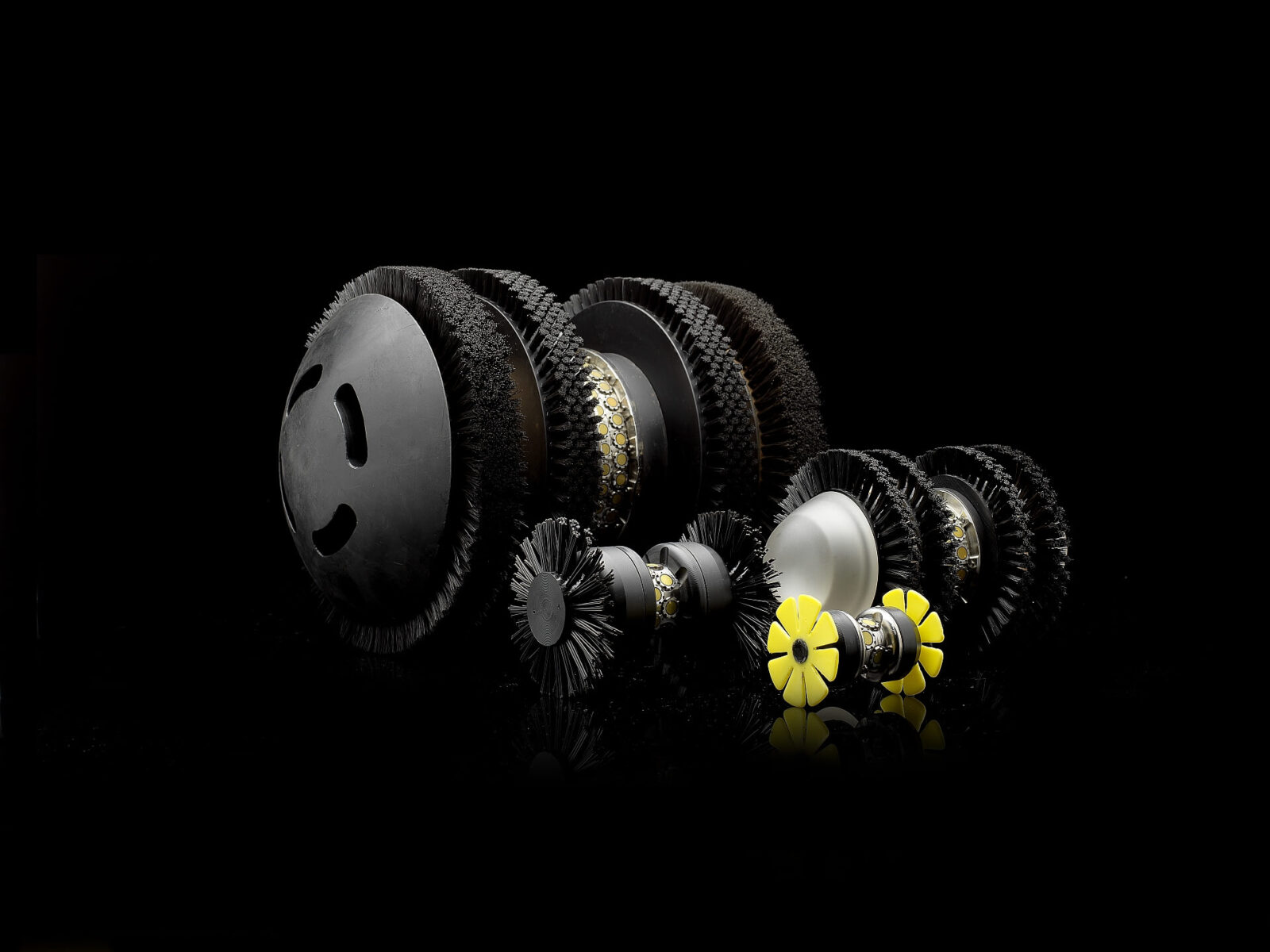
As we celebrate our 20th anniversary, we recognise that innovation is not a milestone but an ongoing journey. With advancements such as odometer-integrated localisation, improved detection algorithms and the integration of machine-learning assisted analysis, the foundations for the next generation of inspection technology are already in motion.
What began as a bold idea in 1997 has grown into an industry-leading inspection solution used worldwide and we look forward to sharing the next chapter with you.


 Environmental Policy