
August 20, 2026
In 2006 Cokebusters faced a practical engineering problem. Our Double Pumping Units were proving highly effective at delivering mechanical pigging services, but the standard trailer-mounted format wasn’t always the right fit.
That standard had largely originated in North America, shaped by a road transport culture where bigger was generally considered better and highway infrastructure was built to accommodate it. For overseas shipping and the increasingly congested shutdown sites where laydown space was at a premium, a different approach was needed.
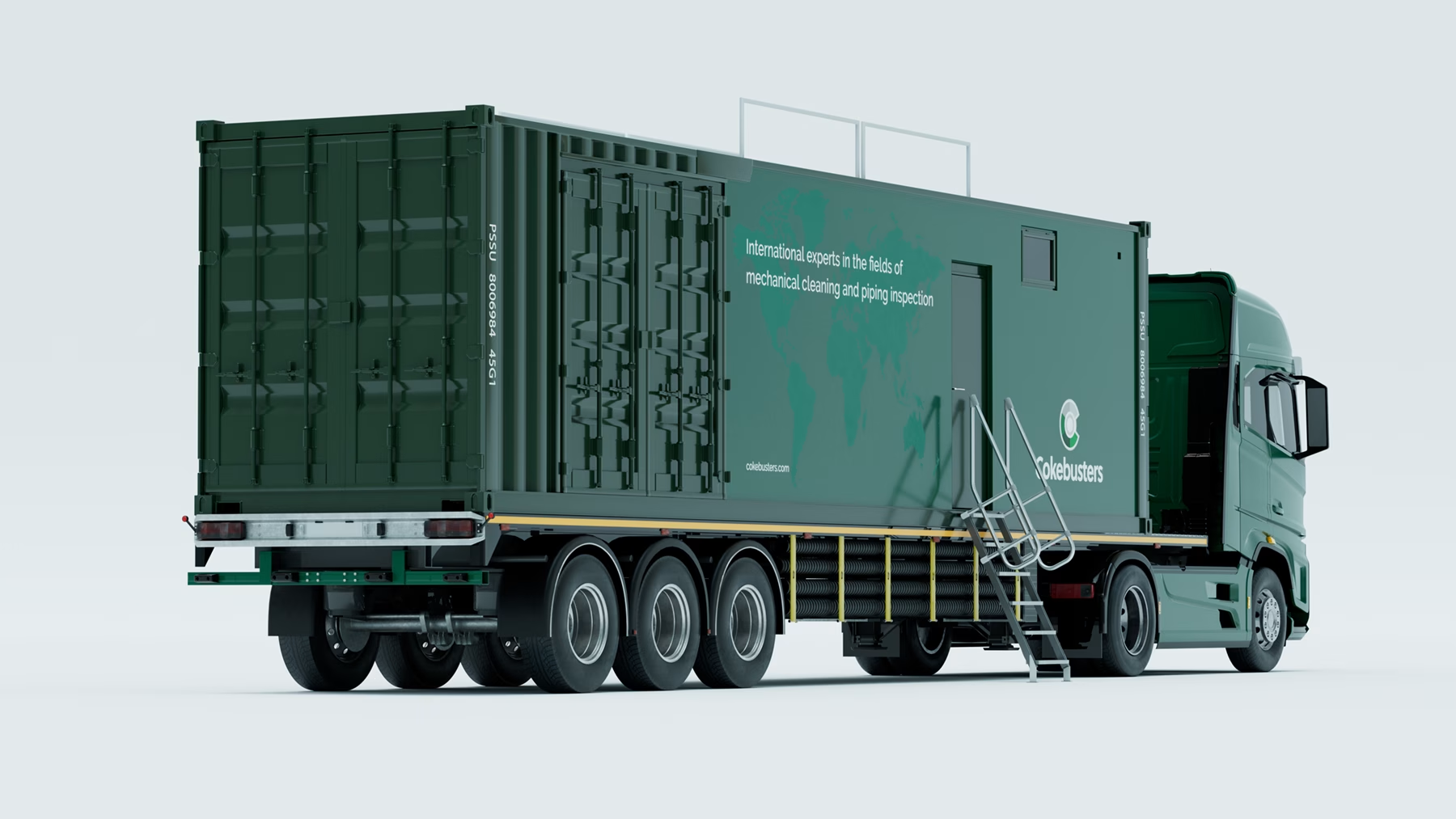
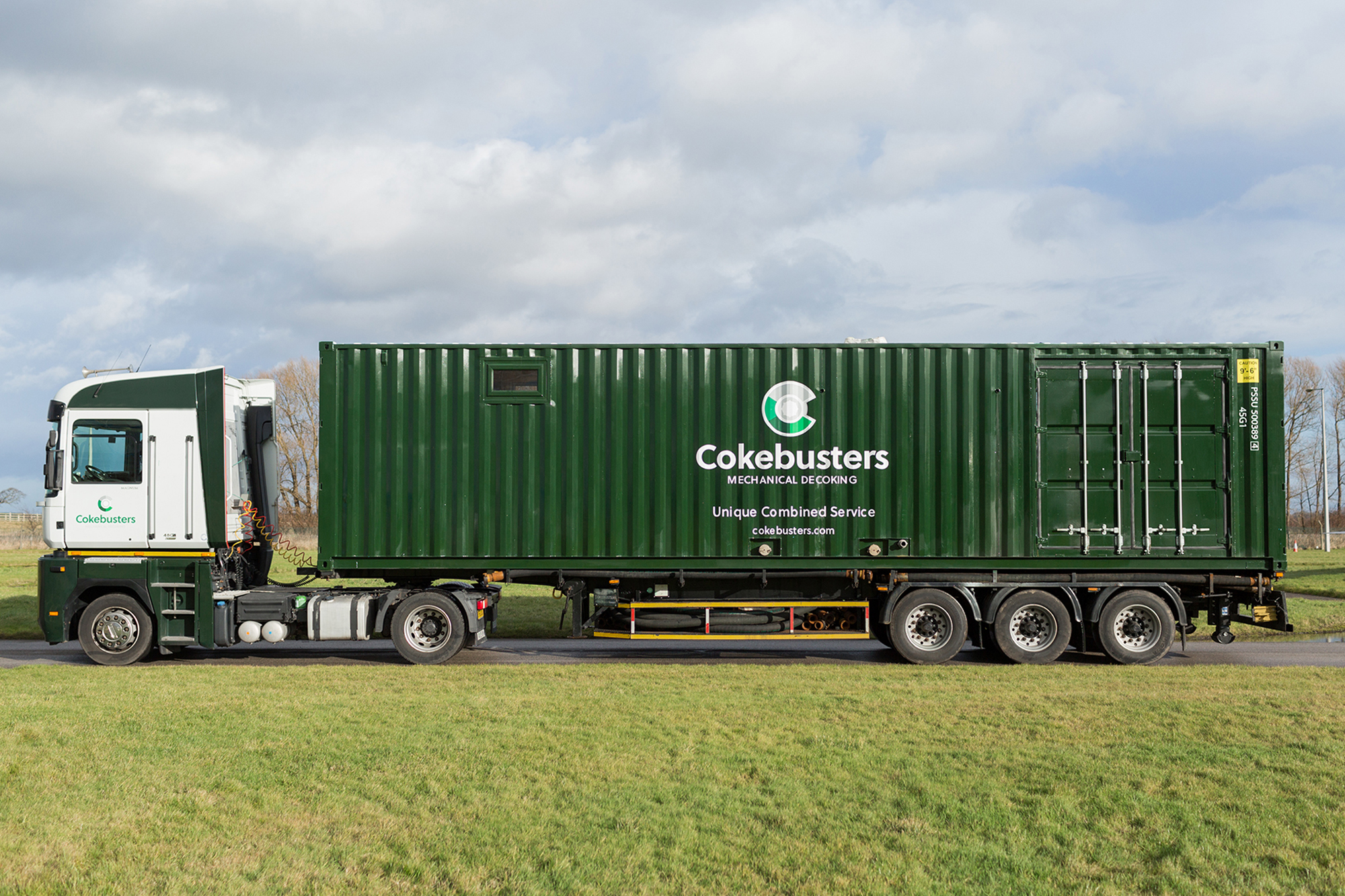
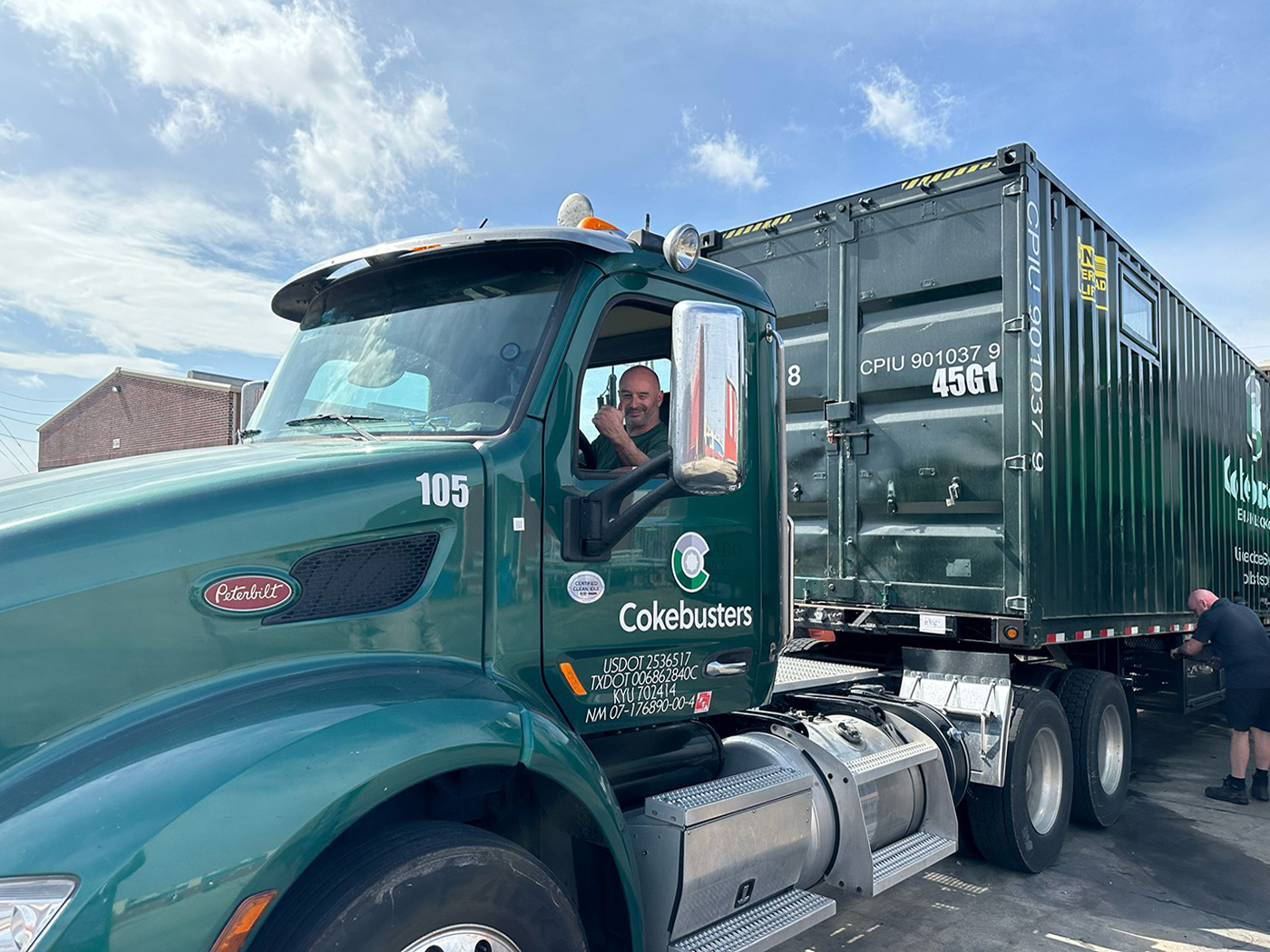
The answer was to design a containerised version of the DPU: a fully self-contained unit built into a 40ft Hi-Cube shipping container, offering the same capability as our trailer-mounted units in a significantly more compact footprint. It was an early example of a principle that continues to shape our approach today. We believe that equipment should be designed around the realities of deployment, not just around performance in isolation.
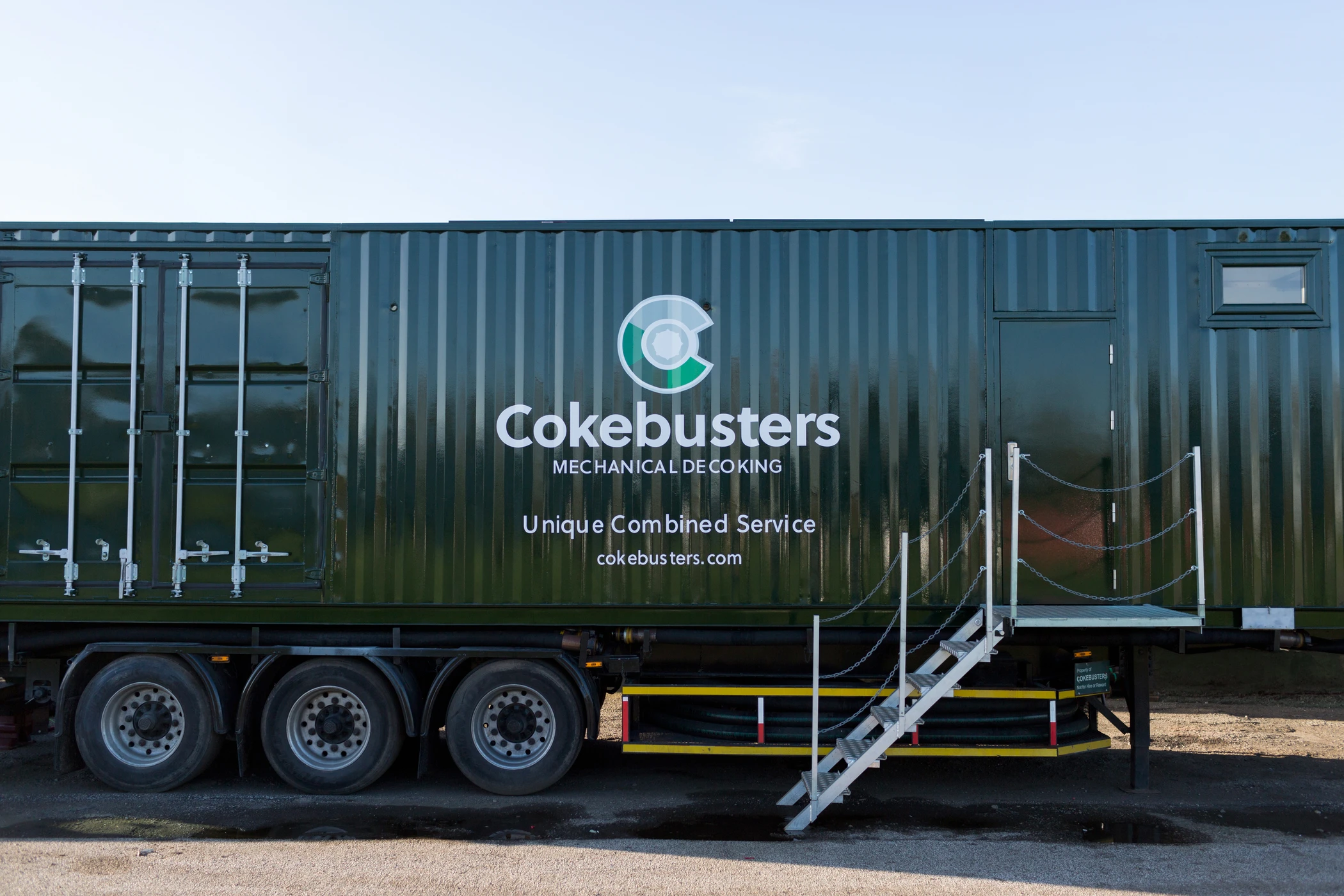
It’s worth being clear about what does and doesn’t change between the two configurations. Both our containerised and trailer-mounted DPUs offer identical operational capability: twin independent pumping engines with bi-directional operation, a fully manned on-board control room, integrated water handling with two-stage filtration to 750 microns, and real-time performance monitoring through our InnerVision™ system.
The difference lies entirely in form. Our containerised units are built to a 40ft Hi-Cube footprint and the size was chosen deliberately. It’s taller than a standard shipping container to preserve full functionality within the space.
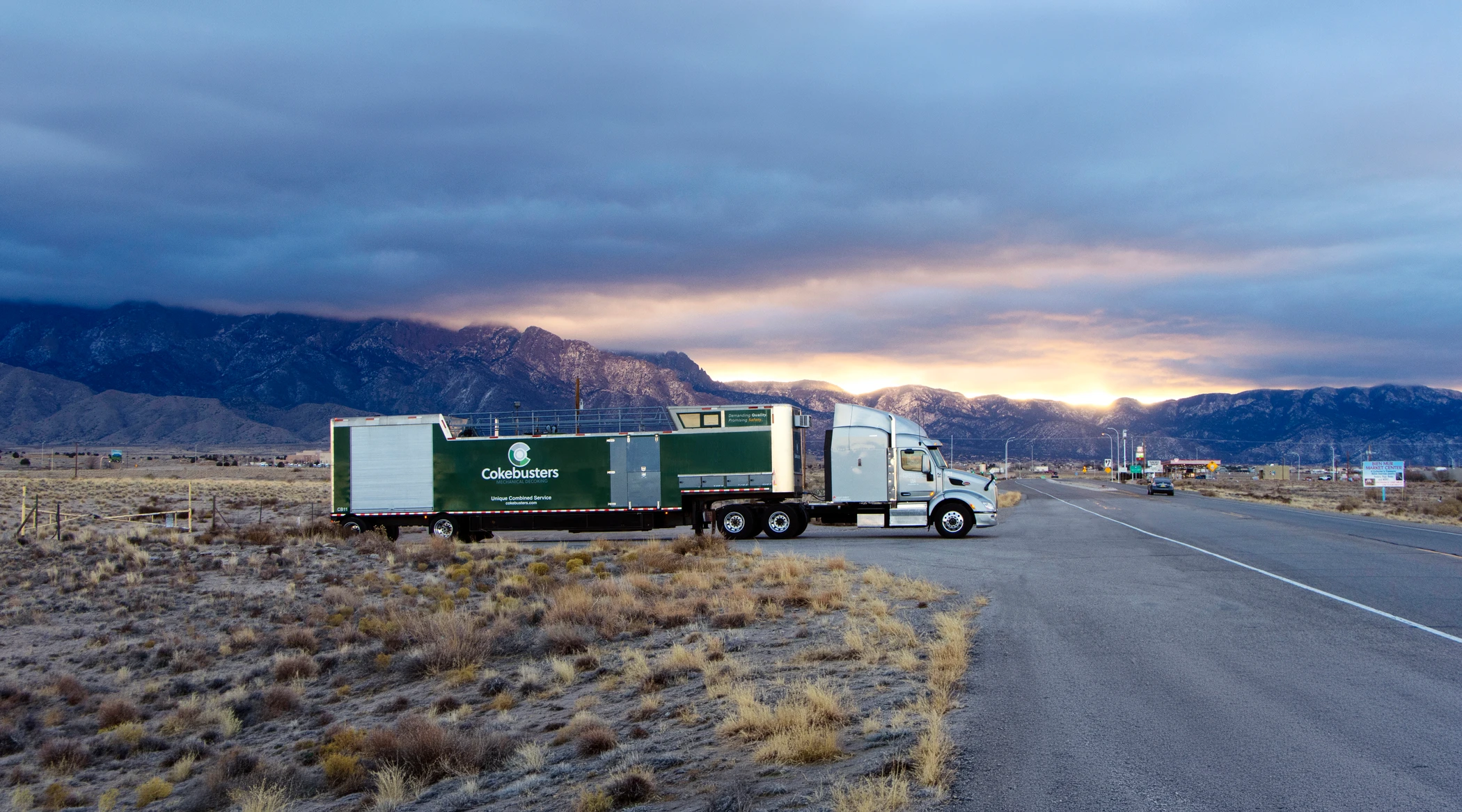
The containerised unit is considerably more compact than our 48ft trailer-mounted configuration, a size shaped less by operational necessity than by the road transport conventions it originated from. For comparison, the standard European trailer is closer to 44ft (13.6m), reflecting the different regulatory and infrastructure conventions that shape road transport on this side of the Atlantic. Achieving the containerised footprint required careful attention to spatial efficiency in the design, with every element positioned deliberately to preserve full functionality within a smaller space, rather than compromising on capability to achieve it.
This distinction becomes significant the moment a unit needs to be mobilised. By building the DPU into a standard shipping container format, the unit can be lifted directly onto a freight vessel and transported to far-flung regions using conventional sea freight. This is a considerably more cost-effective route than road transport and one that opens up destinations where moving an oversized trailer would be impractical or prohibitively expensive.
On congested shutdown sites, the benefit is equally practical. Laydown space is frequently the limiting factor for contractor mobilisation, and the smaller footprint of a containerised unit can make the difference between straightforward deployment and a logistical challenge.
Nearly two decades on, this early design decision continues to shape how our fleet is deployed globally. Containerised units built and based in the UK are now strategically positioned across the Middle East and South America, supporting operators in regions where shipping logistics and site access considerations favour the compact format. The same advantages extend further east: the ease and lower cost of container shipping mean these units can also be readily deployed to Malaysia, Singapore and other locations across the Far East.
The pattern is increasingly evident closer to home too. US clients operating on congested sites are now actively requesting containerised units, recognising the same site-access advantages that drove the original design.
The containerised DPU is a useful illustration of a broader principle that has guided Cokebusters’ engineering since the beginning: capability should never be compromised, but the way that capability is packaged should respond directly to the realities of where and how it needs to be delivered.
As our operations continue to expand into new regions and increasingly complex sites, this kind of design thinking remains as relevant today as it was in 2006. Every site is different and every client’s operational constraints are different too. This ensures we can mobilise the right equipment for the specific demands of each project, without asking the site or the client to accommodate compromise.
If you’re planning a shutdown or mobilisation and want to discuss which DPU configuration best suits your site, get in touch with our team. We’re happy to talk through the practicalities of your project.
