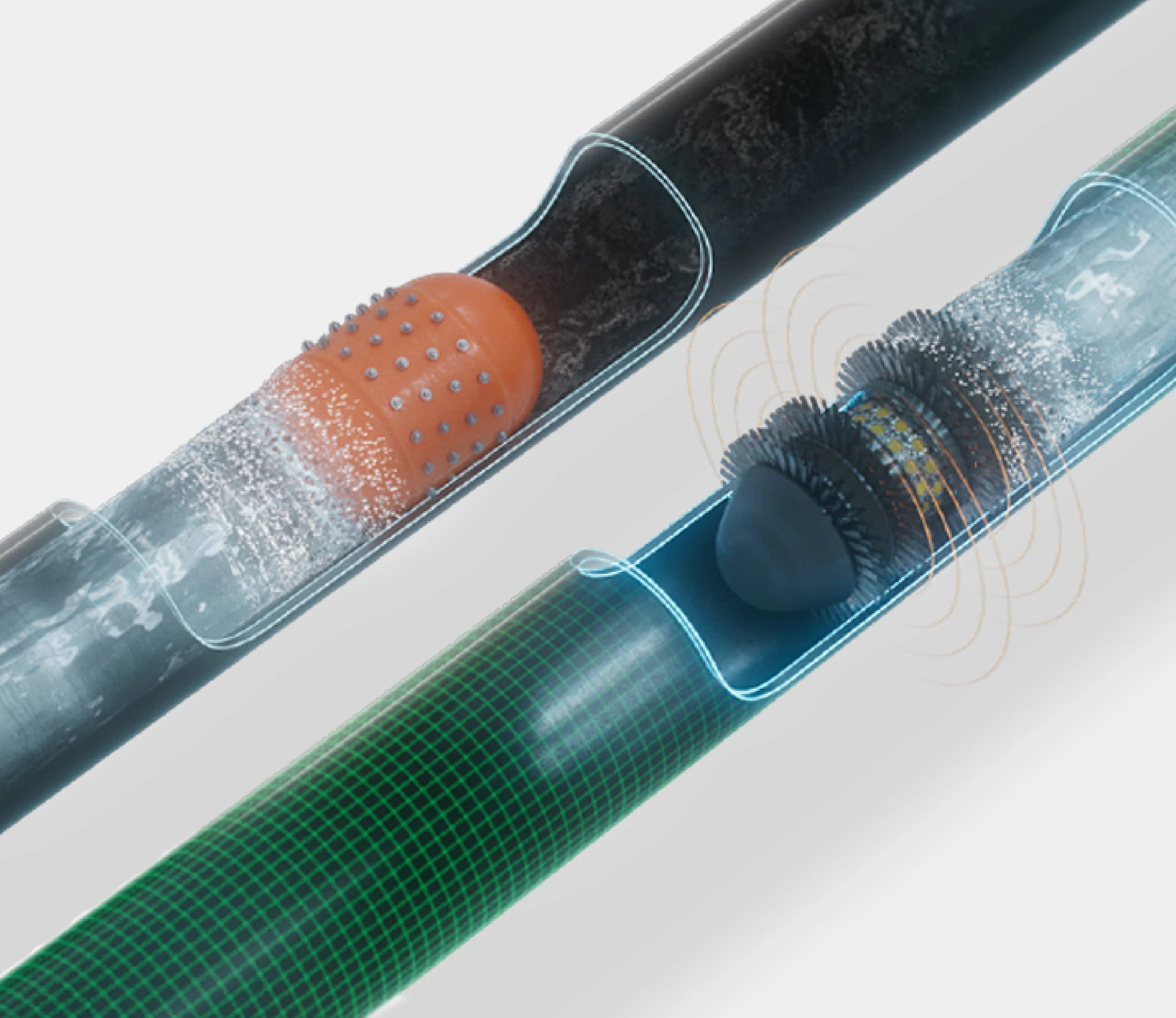
Verifying internal tube cleanliness has become an increasingly important requirement for operators following mechanical decoking and descaling operations.
Effective mechanical cleaning is known to significantly enhance the performance of furnaces, boilers and process units. However, fouling on internal tube surfaces reduces thermal efficiency, raises operating temperatures and negatively impacts throughput, profitability and asset integrity.
Historically, the industry has relied heavily on mostly qualitative judgements and subjective interpretation of indirect indicators such as pressure and flow behaviour. While these cleanliness verification methods have long been accepted, they provide limited certainty and do not offer definitive evidence of internal cleanliness.
During mechanical cleaning operations, a range of techniques may be used to infer cleaning effectiveness, including:
While useful, these measures are largely qualitative and can be influenced by human interpretation, operational bias or incomplete coverage of the asset. As a result, operators are often left without clear, scientific tube cleanliness verification.
Cokebusters’ cleanliness verification services remove uncertainty by enabling operators to directly assess internal conditions across the full length of process tubing.
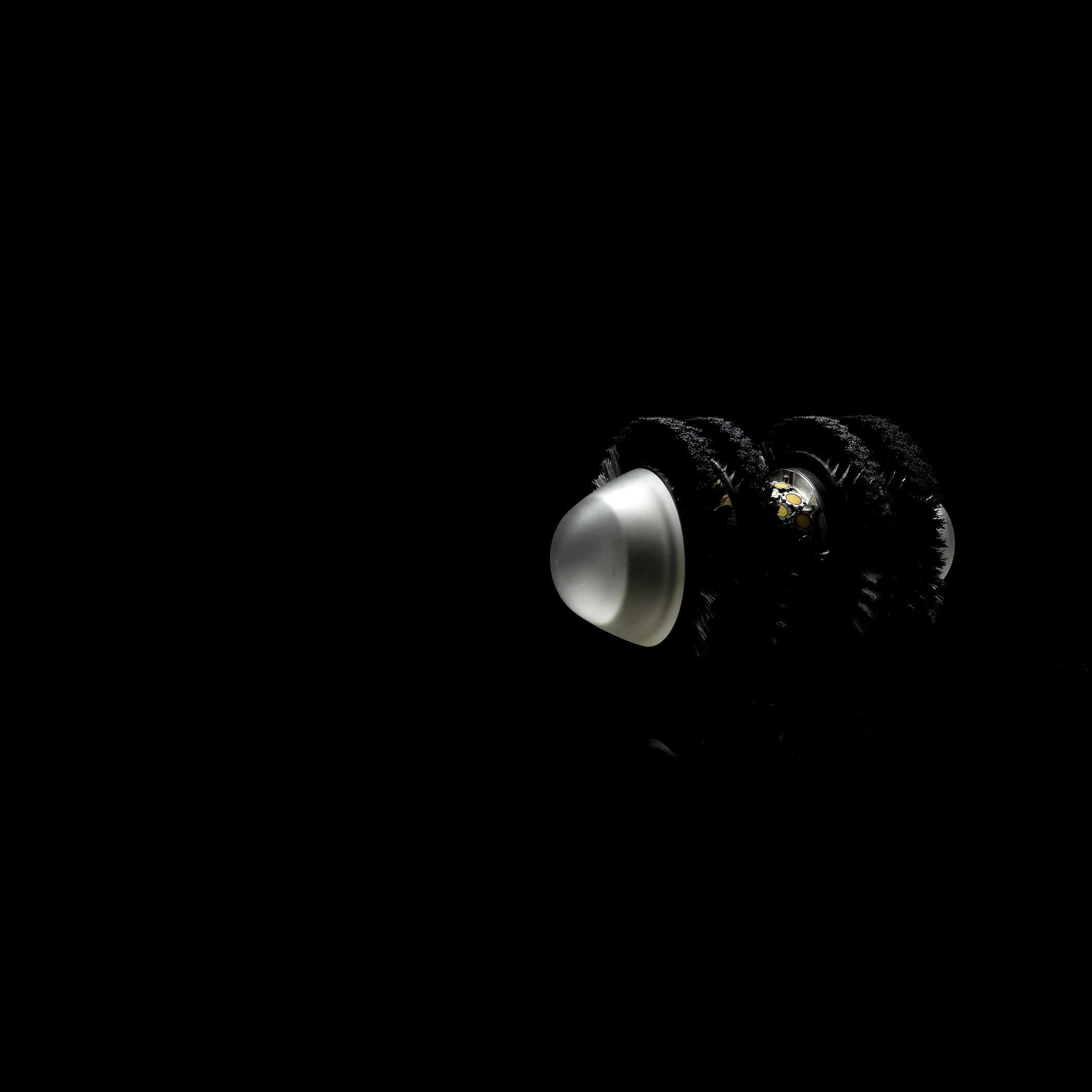
Using ultrasonic data gathered by a Cokebusters intelligent pig, our Coke & Scale Removal Verification (CRV) approach allows residual fouling to be detected, quantified and precisely located. This enables objective post-cleaning verification of internal cleanliness rather than reliance on indirect indicators.
The intelligent pig is deployed using the same access and connection arrangements as the mechanical cleaning operation, allowing efficient post-cleaning inspection without additional system modifications.
Data gathered during and following mechanical cleaning provides accurate internal radius measurements and wall profiles, enabling:
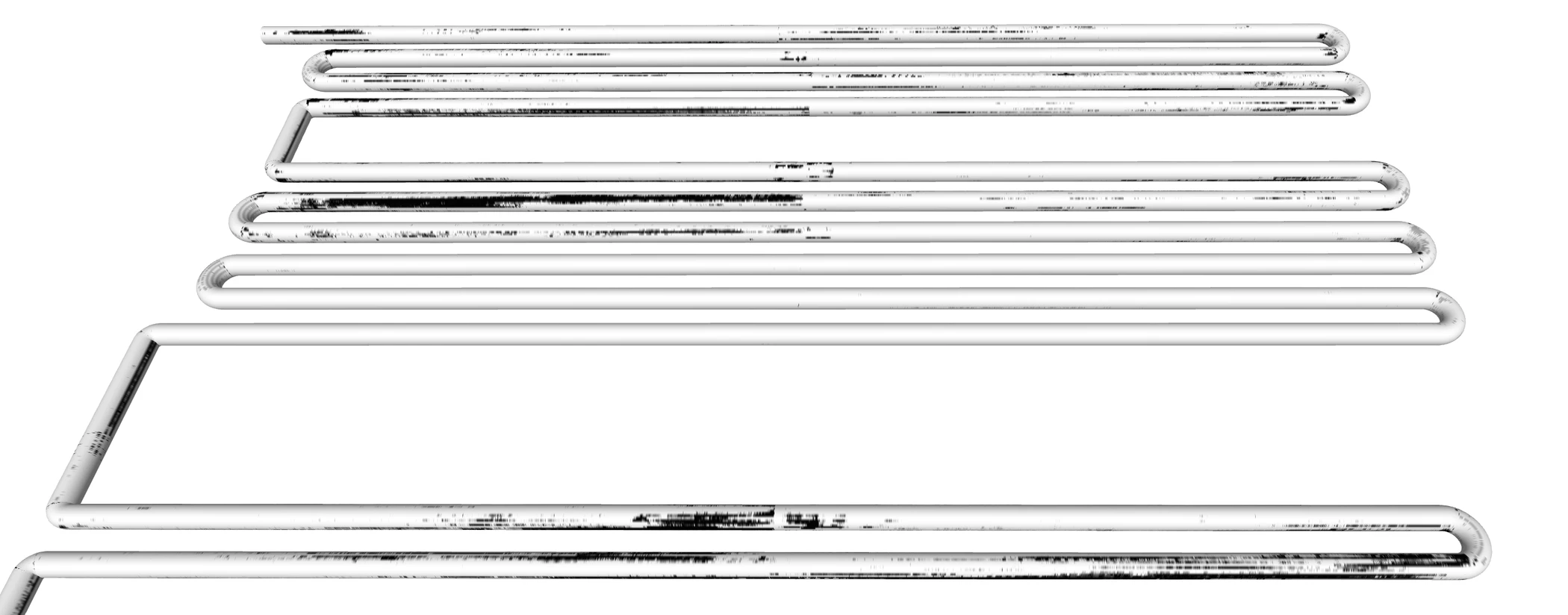
Validated inspection data can also be presented as C-scan visualisations, providing a clear graphical representation of remaining fouling within the coil or tube configuration. This supports identification of underlying contributors such as hot spots, flame impingement, poor burner alignment or restricted flow zones.
Cleanliness verification is most powerful when delivered as part of a combined service.
Cokebusters pioneered and patented the practice of combined mechanical cleaning and in-line inspection in 2007. Our mechanical cleaning operators and inspection technicians work as a single, integrated team, communicating seamlessly throughout the operation.
Inspection can be deployed in several ways depending on asset condition and operational objectives: